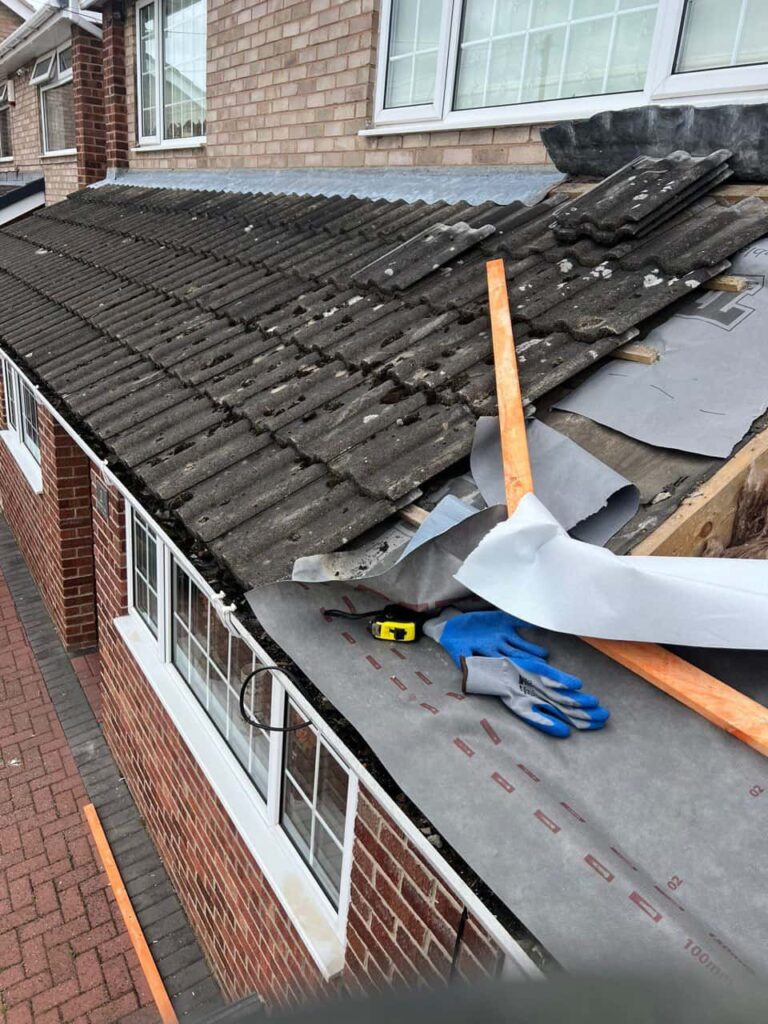
Previous roof repairs can tell an important story about the condition of a property. When work has been carried out correctly, individual repairs can continue performing reliably for many years. However, where repairs have been poorly executed, repeatedly patched or installed without addressing the original cause, they can leave a roof with multiple weaknesses that become increasingly difficult to manage.
For homeowners in Halesowen, West Midlands, a new roof can provide an opportunity to resolve these accumulated problems comprehensively. That does not mean every roof containing previous repairs needs replacing. The decision should depend on the condition of the complete roofing system and whether further localised work can realistically restore dependable performance.
How Can a New Roof Correct Problems Created by Previous Repairs?
A new roof is fundamentally different from adding another repair to an existing problem. Instead of working around layers of previous interventions, the existing covering can be removed so that the condition beneath becomes visible and the roofing system can be reconstructed correctly.
This provides an opportunity to address underlying defects, replace unsuitable materials and ensure that the various components of the roof work together. Where years of poorly executed repairs have created widespread inconsistencies, this comprehensive approach can restore the roof on a much more reliable basis.
Poor Repairs Can Hide the Original Problem
One difficulty with repeated roof repairs is that the original cause of the defect can gradually become obscured.
A leak may have been patched several times in slightly different locations without establishing where water was actually entering. Additional materials can then make the area more complicated to inspect and understand.
When the existing covering is removed during a new roof installation, these concealed areas can be exposed and assessed directly. This allows problems to be addressed from their source rather than simply covered again.
Removing Old Materials Reveals What Is Underneath
Some of the most important components of a roof cannot be properly assessed from the outside.
Tiles or slates may conceal underlay, battens and other parts of the roof construction. Previous water ingress may also have affected areas that remained hidden after a surface repair was completed.
Stripping an extensively deteriorated roof provides access to these components. Any areas requiring attention can then be identified before the new roofing system is installed.
A New Roof Can Restore Consistency
Repeated repairs completed at different times can leave a roof containing a mixture of materials, details and installation methods.
Although individual repairs may sometimes remain perfectly serviceable, poorly coordinated work can result in uneven overlaps, inconsistent junctions or sections that no longer perform together effectively.
New roof installation allows the covering and associated components to be approached as one complete system. Consistent preparation and installation across the roof can eliminate many of the weaknesses created by unsuitable previous work.
Incorrect Tile or Slate Installation Can Be Corrected
Tiles and slates rely on correct positioning, overlap and fixing to manage rainwater effectively.
Poor previous repairs may have introduced replacement materials that do not sit correctly with the surrounding covering. In some cases, attempts to secure one section can also interfere with neighbouring materials.
A new roof provides the opportunity to establish correct positioning throughout the roof slopes rather than continually adapting new repairs around existing inconsistencies.
Problems With Battens Can Be Addressed
If previous repairs concentrated only on the visible roof covering, problems with supporting battens may have remained undetected.
Weak or deteriorated battens can contribute to movement of tiles or slates and may explain why certain sections repeatedly require attention. Continually repositioning the covering will not provide a dependable solution if the support beneath it is unsuitable.
Where a new roof is appropriate, the condition of these underlying components can be assessed and addressed before the new covering is installed.
Old Underlay Problems Can Be Eliminated
Underlay provides an important secondary layer beneath the primary roof covering.
If it has deteriorated, been damaged during previous work or contains poorly treated areas around earlier repairs, simply correcting individual tiles above may not resolve every vulnerability.
A new roofing system allows suitable underlay to be installed consistently across the relevant areas, with appropriate attention given to overlaps and roof details.
Poor Flashing Repairs Can Cause Recurring Leaks
Roof junctions are frequent locations for recurring water ingress because several materials need to work together within a relatively small area.
Previous repairs may have concentrated on sealing visible gaps without properly reconstructing the flashing detail. This can temporarily reduce water ingress while leaving the junction vulnerable.
During comprehensive roof work, flashing can be considered as part of the overall roofing system rather than as another isolated patch.
Valleys Need More Than Surface-Level Repairs
Valleys carry substantial amounts of rainwater from adjoining roof slopes, making accurate construction particularly important.
A history of repeated repairs around the same valley can indicate that the complete detail needs assessment. Problems may involve surrounding coverings, supporting materials or the valley itself.
Where wider roof replacement is justified, these areas can be reconstructed correctly rather than repeatedly repairing individual points along an already problematic detail.
Previous Repairs Can Sometimes Redirect Water
Poorly designed repair work can unintentionally alter the way water moves across or beneath a roof.
Materials added over existing defects may redirect rainwater towards another vulnerable point rather than correcting the original weakness. The resulting leak can then appear in a different location, making diagnosis increasingly difficult.
Removing unsuitable repair work allows the roof’s drainage routes and weather-resistant details to be restored more systematically.
Repeated Repairs Are Different From Isolated Repairs
The presence of previous repairs should not automatically be viewed negatively.
Most roofs require some maintenance during their service life, and a small number of well-executed repairs can remain completely dependable. The concern is when repairs become increasingly frequent, overlap one another or repeatedly address the same sections.
A pattern of recurring problems can suggest that continuing with individual interventions is no longer resolving the wider condition of the roof.
When Might Further Repair Still Be Appropriate?
A new roof is not always necessary simply because poor repair work is discovered.
If unsuitable previous work is confined to one clearly defined area and the surrounding roofing system remains sound, the defective section may be capable of being removed and reconstructed correctly.
This can preserve serviceable roofing while addressing the actual weakness.
The decision should therefore be based on the extent of the poor workmanship and the condition of the roof around it, rather than assuming replacement is automatically required.
When Does a New Roof Become More Relevant?
Replacement becomes more relevant when poorly executed repairs exist alongside broader deterioration.
For example, a roof may contain numerous patched areas, recurring leaks, deteriorated coverings and weaknesses across several roof details. In this situation, correcting one previous repair may simply leave another vulnerable section nearby.
A new roof can become a more appropriate technical solution when the existing system no longer provides a dependable foundation for further localised work.
The Condition of the Whole Roof Should Guide the Decision
The most visible poor repair is not necessarily the most important consideration.
Before deciding on replacement, the wider condition of the tiles or slates, ridges, hips, valleys, flashing, underlay and supporting materials should be considered. Previous repair areas can also reveal useful patterns about where problems have repeatedly developed.
This complete assessment helps distinguish between a roof requiring corrective repair and one where accumulated deterioration makes comprehensive renewal more appropriate.
A New Roof Should Address Causes, Not Just Appearance
Replacing an unattractive collection of old repairs can certainly improve the appearance of a roof, but visual improvement should not be the primary objective.
The real value comes from removing unreliable work, investigating the construction beneath it and rebuilding the roofing system correctly. A new covering should be supported by suitable preparation and properly formed roof details.
Without this attention beneath the finished surface, replacement would fail to address the very problems it was intended to resolve.
Professional Assessment Prevents Unnecessary Replacement
It can be difficult for a homeowner to judge whether previous poor repairs have compromised one small area or a much larger proportion of the roof.
At Halesowen Roofing Repairs, we assess the condition of previous work alongside the surrounding roofing system before recommending an appropriate solution. For properties in Halesowen, West Midlands, this helps establish whether corrective repairs remain sensible or whether a new roof would provide a more coherent solution to widespread problems.
The objective is to recommend work according to what the roof genuinely requires rather than replacing serviceable materials unnecessarily.
A Properly Installed New Roof Creates a Fresh Starting Point
Where replacement is justified, one of its principal advantages is the opportunity to move away from a cycle of overlapping repairs.
Underlying areas can be inspected, appropriate components installed and important details reconstructed as part of one coordinated roofing system. Future maintenance can then begin from a roof whose condition and construction are clearly understood.
For a property with extensive historic repair problems, this can be considerably more valuable than simply concealing another defect with another patch.
Conclusion
A new roof can resolve problems caused by poorly executed repairs from the past, particularly when those repairs have become widespread, concealed underlying deterioration or contributed to recurring leaks and unreliable roof details. Removing the existing covering can expose hidden defects and allow the roofing system to be reconstructed consistently.
However, poor previous workmanship does not automatically justify complete replacement. If the problem remains confined to a particular section and the surrounding roof is sound, carefully planned corrective repairs may still provide an effective solution.
If your roof in Halesowen, West Midlands contains numerous previous repairs or continues developing problems around older work, contact Halesowen Roofing Repairs. We can assess the condition of the complete roofing system and determine whether further repair or a new roof represents the most appropriate approach.
Call us on: 0121 312 1695
Click here to find out more about Halesowen Roofing Repairs
Click here to complete our contact form and see how we can help with your roofing needs.